Salmon florentine brings restaurant-style flavor to a weeknight dinner. Seared salmon fillets finish in a garlicky Parmesan cream sauce with wilted baby spinach, all in one skillet and ready in about 25 minutes.
Salmon often dries out or sticks to the pan, and cream sauces can turn grainy. This recipe solves both problems with two simple steps: drying the fillets before they hit the pan so the skin crisps, and grating the Parmesan fresh so the sauce melts smooth.
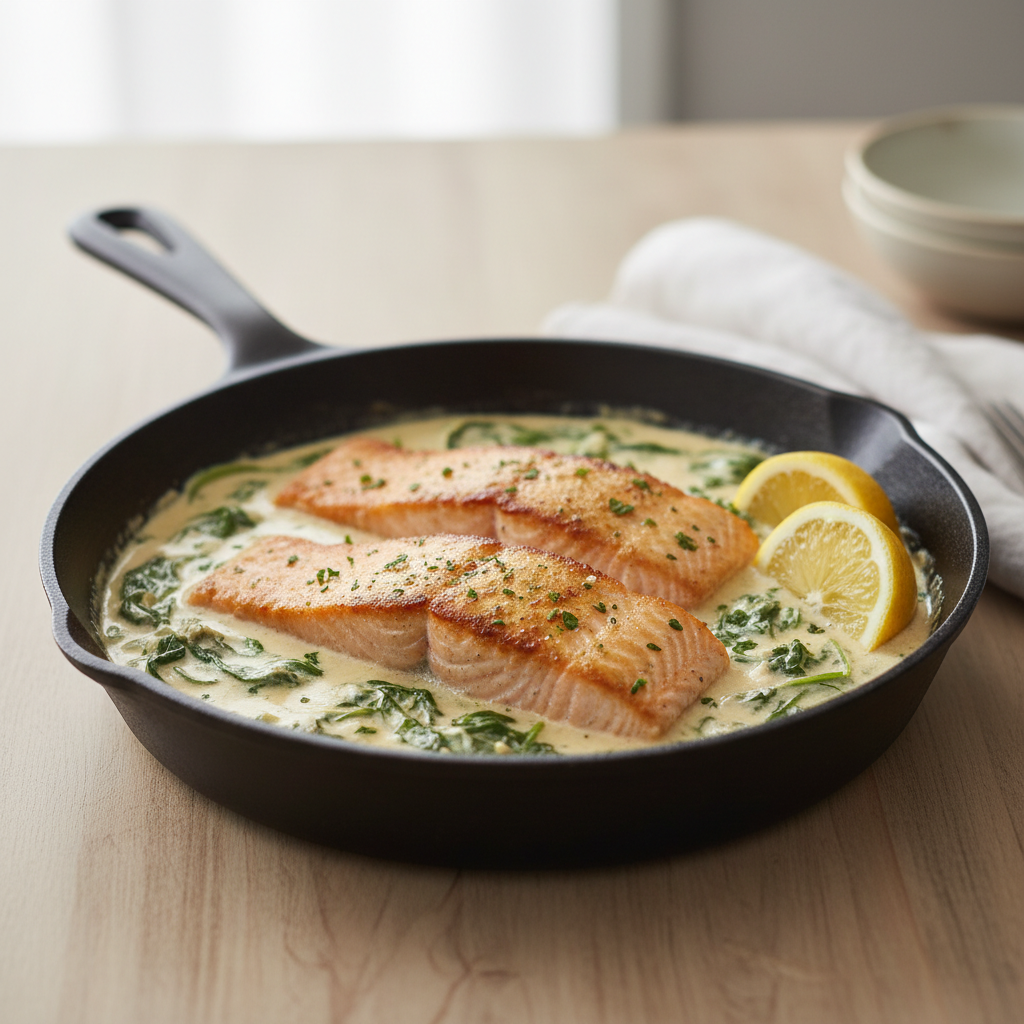
Salmon florentine with seared salmon fillets in a creamy Parmesan spinach sauce.
Recipe Snapshot
Why You’ll Love This Recipe
- Restaurant-Style Sauce: A silky Parmesan cream sauce comes together in one skillet in under five minutes.
- One-Pan Cleanup: The salmon and sauce cook in the same pan, so there is only one dish to wash.
- Naturally Low-Carb: Salmon, spinach, cream, and Parmesan make a filling dinner without pasta or bread.
- Ready in 25 Minutes: A fast option for busy weeknights that still looks like a dinner party plate.
What Makes This Recipe Work
Restaurant-quality salmon florentine comes down to a few simple kitchen techniques:
- Dry Salmon Gets a Crisp Crust: Surface moisture steams the fish instead of searing it. Patting the fillets dry lets the skin crisp and keeps the flesh from sticking to the pan.
- Fresh Parmesan Melts Smoothly: Pre-grated cheese is coated with anti-caking agents that can leave the sauce grainy. Grating a wedge yourself takes a minute and melts cleanly.
- Heavy Cream Stays Silky: Heavy cream is rich enough to hold a smooth texture at a gentle simmer. Lower-fat milk is more likely to thin or curdle.
- A Gentle Finish Keeps Salmon Moist: Simmering the fillets in the sauce for the last few minutes finishes the fish gently, so it stays tender instead of drying out.
Ingredients You Will Need
Salmon & Seasoning
- 2 salmon fillets, about 6 oz (170 g) each (skin-on or skinless)
- 1/2 tsp kosher salt
- 1/4 tsp freshly ground black pepper
- 1 tbsp olive oil
Parmesan Cream Sauce
- 1 tbsp unsalted butter
- 3 cloves garlic, minced
- 1/2 cup heavy cream
- 1/3 cup freshly grated Parmesan (grate it yourself for the smoothest sauce)
- 1/2 tsp Italian seasoning
- Pinch red pepper flakes (optional)
Spinach & Finish
- 5 oz baby spinach (about 5 cups loosely packed)
- 1 tsp lemon juice (optional, for brightness)
- To serve lemon wedges and chopped fresh parsley (optional)
Substitutions: For a dairy-free version, use full-fat canned coconut cream and a dairy-free Parmesan alternative. For a lighter sauce, use half-and-half, and simmer an extra minute to thicken it. Frozen spinach works too: use about 1 cup thawed and squeezed very dry.
Kitchen Tools You Need
- 12-Inch Skillet: A wide pan gives the salmon room to sear without crowding. Stainless steel or nonstick both work.
- Fish Spatula: A thin, flexible spatula slides under the fillets without tearing the skin.
- Paper Towels: Drying the salmon thoroughly is the key to a crisp crust.
- Microplane or Fine Grater: Makes the Parmesan melt quickly and smoothly into the cream.
Step-by-Step Cooking Instructions
Dry and Season the Salmon
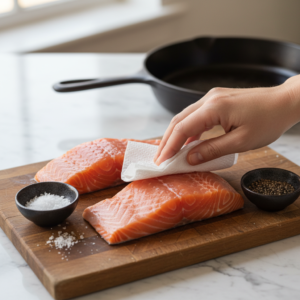
Pat both sides of the salmon fillets completely dry with paper towels. Season all over with the kosher salt and black pepper.

Visual Cue: The surface should look matte, with no visible moisture.
Sear the Salmon
Heat the olive oil in the skillet over medium-high heat until it shimmers. Place the fillets skin-side down and cook undisturbed for 4 to 5 minutes, until the edges turn opaque and the skin is crisp. Flip and cook 2 to 3 minutes more, then move the salmon to a plate. It does not need to be cooked through yet.

Visual Cue: The skin should release easily from the pan when it is ready to flip.
Build the Parmesan Cream Sauce
Reduce the heat to medium and melt the butter in the same pan. Add the garlic and stir for 30 to 60 seconds, until fragrant but not browned. Pour in the heavy cream and bring it to a gentle simmer. Stir in the Parmesan, Italian seasoning, and red pepper flakes if using. Simmer 2 minutes, stirring, until the sauce lightly coats the back of a spoon.

Visual Cue: The sauce should be smooth, with no visible cheese clumps.
Wilt the Spinach
Add the spinach a handful at a time, stirring after each addition, until it has wilted into the sauce, about 1 to 2 minutes. Stir in the lemon juice if using.

Visual Cue: The spinach should be bright green and fully wilted.
Return the Salmon and Finish
Nestle the salmon back into the sauce, skin-side up if it has skin. Spoon the sauce over the fillets and simmer gently for 3 to 4 minutes, until the thickest part reaches 145°F (63°C) and flakes easily with a fork. Garnish with parsley and serve with lemon wedges.
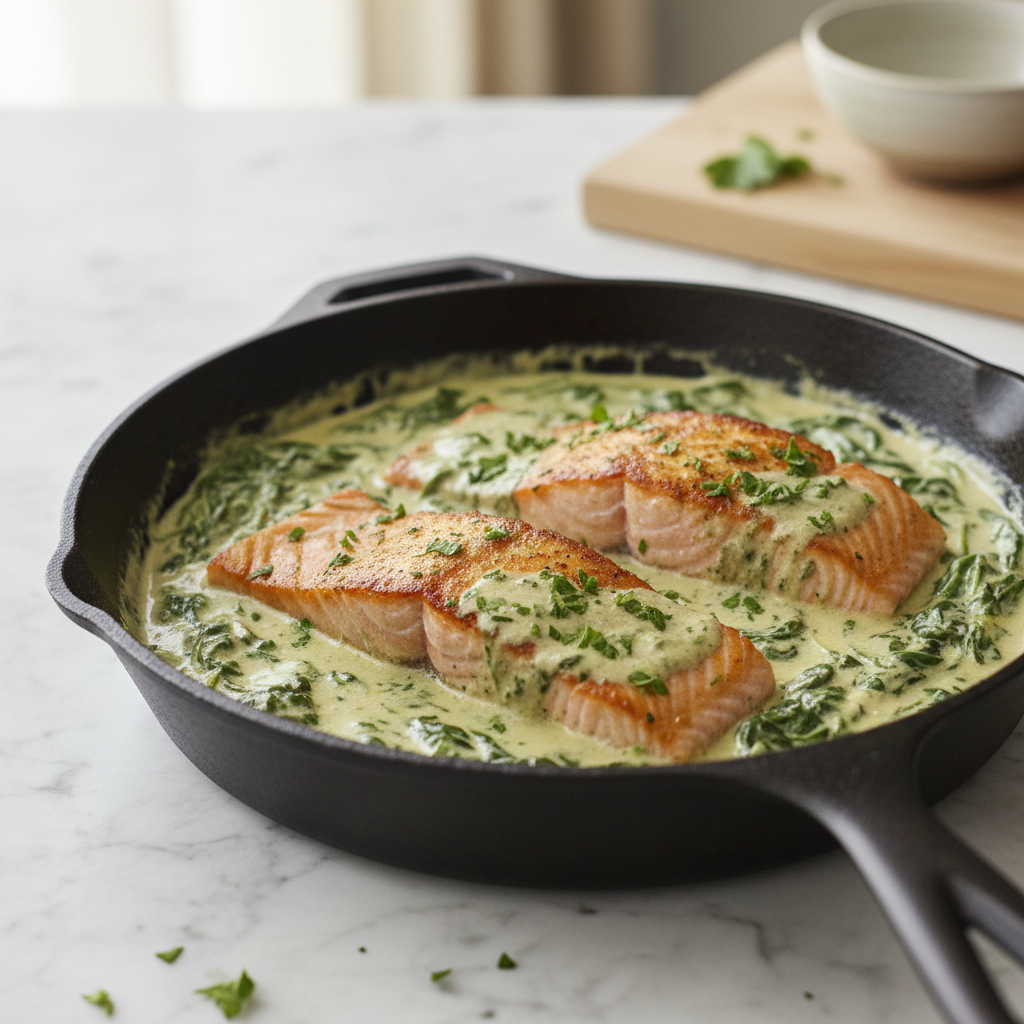
Visual Cue: The fish should be opaque throughout and flake easily when pressed.
How to Know When Your Salmon Florentine Is Ready
- Flake Test: Press the thickest part of a fillet with a fork. It should flake easily and look opaque all the way through.
- Thermometer Check: The thickest part should read 145°F (63°C) on an instant-read thermometer.
- Sauce Check: The sauce should coat the back of a spoon, look glossy, and have no grainy texture.
Kitchen Tips & Common Mistakes
- Wet Salmon Will Not Brown: Pat it dry again if it has been sitting in its packaging. Moisture on the surface steams the fish.
- Do Not Brown the Garlic: Burnt garlic turns the sauce bitter. Lower the heat before adding it to the butter.
- Grate Your Own Parmesan: Pre-shredded cheese contains anti-caking agents that can make the sauce grainy.
- Do Not Overcook the Salmon: It keeps cooking in the sauce, so take it off the heat as soon as it flakes easily.
What to Serve With Salmon Florentine
Salmon florentine pairs well with starches that soak up the sauce and with light vegetables:
- Potatoes: Creamy mashed potatoes or roasted baby potatoes are perfect for mopping up the sauce.
- Green Vegetables: Steamed green beans or roasted asparagus add color and crunch.
- Fresh Salad: Serve with our Fresh Tomato Mozzarella Salad for a light Italian-style dinner.
How to Store and Reheat Leftovers
- Refrigerator: Store salmon and sauce in an airtight container for up to 3 days.
- Stovetop Reheating (Best Method): Warm gently in a skillet over low heat with a splash of cream or water. Stir until just heated through.
- Microwave Reheating: Heat in 30-second bursts at 50% power, stirring between bursts, to keep the fish from drying out.
- Freezer: Not recommended. The cream sauce can separate when thawed.
Frequently Asked Questions
Can I use skin-on or skinless salmon?
Both work. Skin-on fillets give you a crispy texture, and the skin helps hold the fish together. Skinless fillets cook a little faster, so check them a minute early.
Can I use frozen salmon?
Yes. Thaw the fillets overnight in the refrigerator, then pat them very dry before seasoning. Fillets that are not fully thawed will not sear properly.
Why did my cream sauce turn grainy?
Pre-shredded Parmesan is the usual cause. Its anti-caking agents keep the cheese from melting smoothly. Grate a wedge fresh and keep the heat at a gentle simmer.
Is salmon florentine healthy?
Salmon provides protein and omega-3 fatty acids, and spinach adds vitamins and minerals. The cream and Parmesan make the sauce rich, so a smaller spoonful or a lighter cream swap reduces the calories.
Can I make it without cream?
Full-fat coconut cream is the closest dairy-free option. Using only milk produces a thinner sauce that may not coat the spinach as well.
Easy Salmon Florentine
Ingredients
Equipment
Method
- Pat both sides of the salmon fillets completely dry with paper towels. Season all over with the kosher salt and black pepper.
- Heat the olive oil in the skillet over medium-high heat until it shimmers. Place the fillets skin-side down and cook undisturbed for 4 to 5 minutes, until the edges turn opaque and the skin is crisp. Flip and cook 2 to 3 minutes more, then move the salmon to a plate. It does not need to be cooked through yet.

- Reduce the heat to medium and melt the butter in the same pan. Add the garlic and stir for 30 to 60 seconds, until fragrant but not browned. Pour in the heavy cream and bring it to a gentle simmer. Stir in the Parmesan, Italian seasoning, and red pepper flakes if using. Simmer 2 minutes, stirring, until the sauce lightly coats the back of a spoon.

- Add the spinach a handful at a time, stirring after each addition, until it has wilted into the sauce, about 1 to 2 minutes. Stir in the lemon juice if using.

- Nestle the salmon back into the sauce, skin-side up if it has skin. Spoon the sauce over the fillets and simmer gently for 3 to 4 minutes, until the thickest part reaches 145°F (63°C) and flakes easily with a fork. Garnish with parsley and serve with lemon wedges.

Leave a Reply